
News
Pax Silica Philippines: Why I Support It With Eyes Wide Open
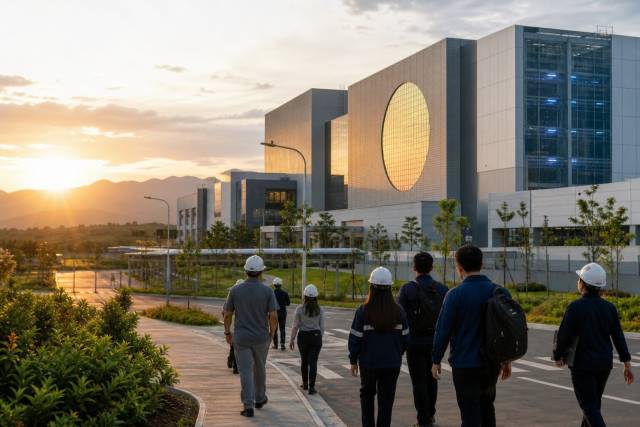
I support Pax Silica in the Philippines.
I do not support it blindly. I do not assume every promise will be fulfilled, every agreement will favor Filipinos, or every official involved will act honestly. A project this large creates opportunities for workers and investors, but it also creates opportunities for corruption, foreign influence, environmental damage, and communities being ignored.
Those risks are real. So is the opportunity.
The Philippines has spent too long exporting talent, raw materials, and low-value work while other countries capture the industries built from them. Pax Silica could help change that by placing the country inside the supply chains for artificial intelligence, semiconductors, critical minerals, and advanced manufacturing.
My position is simple: pursue it, protect the country, expose every deal to scrutiny, and punish anyone who steals from it.
Should the Philippines support Pax Silica?
Quick answer: Yes, provided that the agreements are transparent, Philippine sovereignty remains non-negotiable, communities and natural resources are protected, and the jobs and industrial capacity genuinely benefit Filipinos.
The government projects that the proposed New Clark City development could generate more than 130,000 high-quality jobs and attract between $40 billion and $70 billion in investment once fully developed. Those are projections, not guarantees. Even a fraction of that outcome, however, would be nationally significant.
Pax Silica deserves support because it could create skilled careers, move the Philippines higher in global technology supply chains, and make our stability more important to powerful economic and security partners. It also deserves aggressive oversight because the same strategic value could increase geopolitical pressure and invite political rent-seeking.
Support and scrutiny are not opposites. For a project this important, they must come together.
What is Pax Silica?
Pax Silica is a United States-led initiative intended to strengthen trusted supply chains for AI, semiconductors, critical minerals, energy, and advanced manufacturing.
The Philippines joined the initiative in April 2026. The United States and the Philippines then announced plans for a 4,000-acre, or roughly 1,620-hectare, industrial hub in New Clark City under the broader Luzon Economic Corridor.
This is not simply a proposal for one giant data center. The stated goal is an industrial ecosystem that can attract manufacturing, mineral processing, semiconductor activity, AI infrastructure, research, and workforce development. The official Luzon Economic Corridor fact sheet describes it as the first AI-native investment acceleration hub under Pax Silica, designed to expand allied manufacturing based on market demand and Philippine advantages.
It is also not a finished project. According to the government's July 2026 Pax Silica briefing, contract negotiations were expected during 2026, planning in 2027, and construction in early 2028. That means the details can still change, and public pressure can still shape the outcome.
Pax Silica could create the jobs Filipinos should be fighting for
The strongest argument for Pax Silica is employment.
The Bases Conversion and Development Authority projects more than 130,000 high-quality jobs if the development reaches its intended scale. It specifically points to opportunities for engineers, researchers, computer science graduates, technicians, and other skilled professionals.
That number should not be repeated as if the jobs already exist. Large developments change, investors withdraw, automation reduces staffing, and politicians are very good at announcing the upper end of a forecast.
But the direction is right.
The Philippines needs more jobs that allow skilled Filipinos to build a future here. We should not train engineers, developers, scientists, and technicians only to watch them leave because the serious work is somewhere else. A domestic advanced-manufacturing ecosystem could turn part of our brain drain into brain gain.
The opportunity is not limited to people with university degrees. A real industrial hub requires construction workers, electricians, equipment technicians, logistics teams, safety specialists, maintenance crews, trainers, suppliers, food services, transport, and thousands of supporting businesses.
Whether the final number is in the tens of thousands or passes 100,000, these are the kinds of jobs worth pursuing.
The condition is that they must become Filipino jobs. Investment incentives should be tied to measurable local hiring, apprenticeships, supplier development, and skills transfer. Otherwise, we risk hosting expensive facilities while importing too much of the expertise and exporting too much of the value.
The Philippines should be building future technology, not watching it arrive
The country already participates in the global semiconductor and electronics industry, but too much of our economic role remains farther down the value chain.
Pax Silica could help us move from assembling and exporting toward designing, processing, testing, researching, and manufacturing higher-value products. That matters because AI is not only software. It depends on chips, power, networks, cooling, minerals, fabrication equipment, secure logistics, and people capable of operating the entire system.
Countries that build this infrastructure will influence the next generation of technology. Countries that merely consume it will pay for decisions made elsewhere.
The Philippines has a young workforce, strong English proficiency, an existing electronics base, valuable mineral resources, and a strategic location. Those advantages do not automatically become prosperity. They become prosperity when the country develops the skills, infrastructure, institutions, and local companies needed to capture more value.
I previously wrote about how AI is already changing jobs in the Philippines. Pax Silica offers a chance to respond with more than short training courses and speeches. It could create the physical and industrial foundation for Filipinos to participate in the technology economy as builders.
Strategic importance can improve security, but it can also attract risk
There is a national-security argument for hosting strategically important technology infrastructure.
If companies and governments from allied countries invest billions of dollars in Philippine semiconductor, AI, and advanced-manufacturing capacity, they acquire a stronger interest in keeping the country stable, secure, connected, and economically functional. Our security would matter not only because of treaties and diplomacy, but because disruption here would damage supply chains they depend on.
That does not guarantee anyone will protect us. Foreign governments act according to their interests, and those interests can change. A factory is not a defense treaty.
The same strategic importance can also make the Philippines a more visible target for cyberattacks, espionage, economic coercion, and pressure arising from competition between the United States and China. Tying ourselves more closely to trusted supply chains will have geopolitical consequences.
My conclusion is not that strategic importance makes us perfectly safe. It is that being economically indispensable gives us more leverage than remaining peripheral. We should pursue that leverage while investing in cybersecurity, resilient energy and communications, independent foreign policy, and our own defense capability.
Corruption is theft, and we should call it exactly that
Let us not pretend a project involving land, permits, incentives, foreign investors, infrastructure, and tens of billions of dollars will somehow exist outside Philippine politics.
Could politicians try to grease their palms? Of course. Large pools of money attract fixers, cronies, brokers, contractors, and officials who believe public office entitles them to a cut.
That would be corruption. Corruption is not a harmless commission or the normal cost of getting things done. It is theft from Filipinos.
If an official diverts even one peso, manipulates a contract, conceals a beneficial owner, or trades the public interest for a private reward, investigate and prosecute that person. Supporting Pax Silica does not require tolerating theft.
There is also an important distinction between a valuable national project being targeted by corrupt people and a project that exists mainly as a vehicle for patronage.
The Philippines has seen too many public projects produce inflated contracts, poor work, ceremonial launches, and little lasting value. A corrupt official may benefit, while taxpayers receive an inferior road, an unused building, or another promise that disappears after the cameras leave.
Pax Silica could be different because its potential public return is much larger: tens of thousands of skilled jobs, major private investment, technology transfer, local supplier growth, stronger infrastructure, and a position in industries that will shape the future.
That does not make corruption acceptable. It means the answer is to prevent and punish corruption while preserving the legitimate opportunity. Rejecting every valuable project because a politician might steal would leave honest Filipinos with no investment, no jobs, and no protection from the next politician who steals from something less useful.
Do not throw away the factory. Catch the thief.
The negative impacts cannot be dismissed
Supporting Pax Silica means confronting its possible costs before construction begins, not after the damage becomes irreversible.
Water and energy
Advanced manufacturing and computing infrastructure can consume enormous amounts of water and electricity. BCDA says the project's estimated demand would be 65 million to 90 million liters of water per day and proposes a surface-water harvesting system rather than groundwater extraction. It says the initial system could supply up to 120 million liters per day.
Those are plans and agency estimates. They need independent technical review, public baseline data, continuous monitoring, and enforceable rules that prioritize surrounding communities during shortages. The same standard must apply to electricity. The project should add resilient generation and grid capacity rather than forcing ordinary Filipinos to compete with industrial users for unreliable power.
Land, communities, and the environment
The proposed site is public land titled to BCDA, according to the agency, and the government says indigenous communities will not be displaced. Those assurances should be verified through transparent mapping, meaningful consultation, and accessible grievance processes.
Development can change drainage, traffic, housing costs, livelihoods, biodiversity, and access to land even when no home sits directly under a factory. Environmental Compliance Certificates are a minimum legal requirement, not proof that every impact has been solved.
Host communities should receive more than compensation after decisions are made. They should have a voice before those decisions become contracts.
Foreign control and sovereignty
International capital will expect long leases, predictable rules, access to infrastructure, and protection for its investments. The Philippines must ensure that those arrangements do not quietly transfer control over critical minerals, strategic data, or essential infrastructure.
Ownership structures, lease terms, tax incentives, data rules, security responsibilities, and dispute mechanisms should be open to public scrutiny except for narrowly defined information that genuinely requires confidentiality.
Partnership is not surrender, but secrecy makes it difficult to tell the difference.
Promises may fall short
The projected jobs and investment could fail to materialize. Facilities could become more automated than expected. Investors could secure incentives and delay construction. High-value roles could go to foreign specialists while Filipinos receive mostly temporary or lower-paid work.
Every public incentive should therefore be tied to milestones. No verified investment, hiring, training, or construction should mean no corresponding benefit from the government.
My conditions for supporting Pax Silica Philippines
I support proceeding, but support should come with demands.
- Publish the agreements. Filipinos should be able to examine the principal framework, leases, incentives, ownership structures, and public obligations.
- Disclose the people behind every contractor and investor. Beneficial ownership must be visible so officials cannot hide their interests behind layers of companies.
- Use transparent procurement and independent audits. Major awards, amendments, spending, and milestones should be published in formats journalists and citizens can analyze.
- Make Filipino employment measurable. Agreements should include local hiring, apprenticeships, scholarships, supplier development, and technology-transfer targets.
- Protect water, energy, and communities. Independent monitoring data should be public, with enforceable limits and clear remedies when commitments are broken.
- Keep sovereignty non-negotiable. Philippine law, regulators, security interests, and democratic institutions must remain in control.
- Build cyber and physical resilience. Critical infrastructure needs security standards, incident coordination, redundancy, and clear responsibility before operations begin.
- Recover benefits when investors fail to deliver. Incentives should include clawbacks when promised investment, construction, or employment does not happen.
These are not anti-investment demands. They are how a serious country handles strategic investment.
Frequently Asked Questions
What is Pax Silica?
Pax Silica is a United States-led initiative focused on trusted supply chains for artificial intelligence, semiconductors, critical minerals, energy, and advanced manufacturing. The Philippines joined in April 2026 and is proposing a major industrial hub in New Clark City.
How could Pax Silica benefit the Philippines?
It could attract large-scale technology investment, create skilled jobs, develop Filipino suppliers, reduce brain drain, improve infrastructure, and move the country higher in global AI and semiconductor supply chains.
How many jobs could Pax Silica create?
BCDA projects more than 130,000 high-quality jobs once the development is fully built. This is a government projection rather than a guaranteed result, and it should be measured against actual contracts, construction, and hiring.
What are the risks to sovereignty, communities, water, and the environment?
The main risks include foreign influence over strategic assets, geopolitical pressure, heavy water and energy demand, environmental damage, indirect displacement, unfair land arrangements, and promised benefits failing to reach Filipinos.
Why support Pax Silica despite corruption concerns?
Because the project could deliver substantial and lasting public value. The proper response to corruption risk is transparent agreements, independent audits, enforceable milestones, and prosecution of thieves, not automatically abandoning a rare industrial opportunity.
Support it, scrutinize it, and make it work for Filipinos
Pax Silica could fail. It could be captured by political interests, weakened by bad contracts, damaged by secrecy, or remembered as another grand announcement that produced less than promised.
It could also create tens of thousands of careers, anchor major technology industries, strengthen our strategic position, and give Filipino talent more reasons to build a future at home.
I believe that opportunity is worth pursuing.
I am for Pax Silica, but I am for the Philippines first. Support must never become silence, and skepticism must never become paralysis. Demand the safeguards. Publish the deals. Protect communities. Train and hire Filipinos. Prosecute anyone who steals.
Then build something the country can still be proud of decades from now.
I have opened discussions about Pax Silica on Threads and X. Join me there and tell me whether you think this opportunity is worth pursuing with strict safeguards and real accountability.