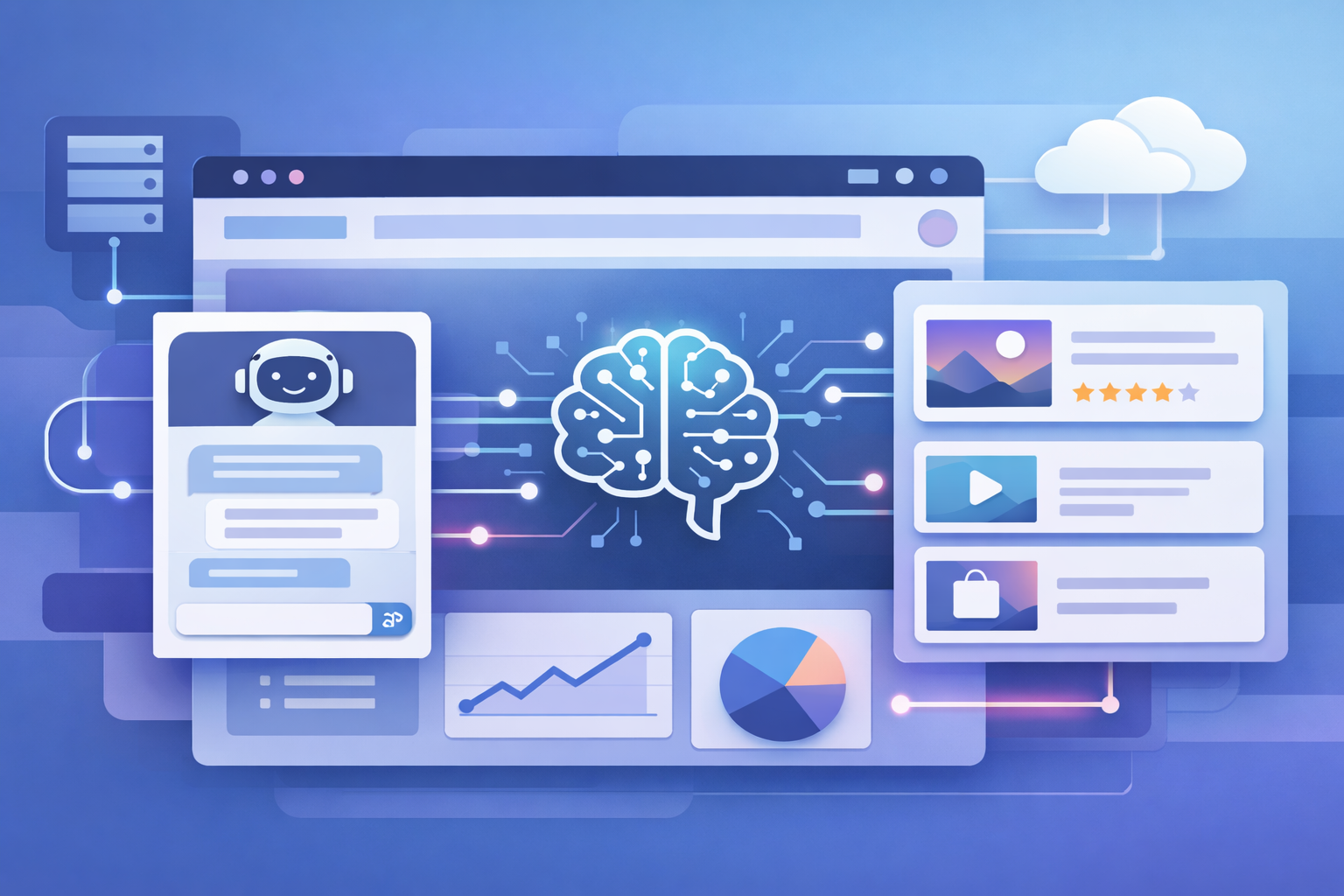
Building intelligent PHP applications is no longer about adding a single chatbot widget and calling it innovation. The more sustainable approach is to introduce AI features where they improve product decisions, user experience, or operational efficiency in a measurable way.
Three AI Features That Deliver Real Product Value
- Predictive signals: identify churn risk, fraud patterns, or support urgency.
- Contextual recommendations: personalize content, offers, or onboarding steps.
- Language workflows: summarize tickets, classify feedback, and draft responses.
Integration Architecture That Keeps PHP Maintainable
For most teams, the cleanest path is to keep AI models behind service boundaries. PHP handles business logic, validation, and user-facing workflows, while external AI services run inference and return structured results. This prevents model concerns from leaking into every layer of the codebase.
Practical Example (PHP)
<?php
$payload = [
    'customer_id' => 42,
    'total_spend' => 1299.50,
    'orders_last_90_days' => 6,
];

$prediction = call_ml_service('/predict/churn', $payload);
if ($prediction['will_churn']) {
    notify_account_team($payload['customer_id']);
}
Prompt Sample for Integration Planning
Design a PHP service layer for AI predictions with retry logic, timeout handling, and structured logging.Implementation Checklist
- Start with one high-impact use case and baseline metrics.
- Design clear contracts for model inputs and outputs.
- Add monitoring for latency, error rates, and prediction drift.
Final Takeaway
Intelligent features should strengthen the product, not complicate the stack. When AI capabilities are wrapped in maintainable PHP architecture and tied to real outcomes, they become durable advantages rather than one-off experiments.